Forests are managed through records: where plantations are, which timber is moving on which road, where a fire has been reported, what grows in a protected area. For a large forest department, those records have traditionally lived in registers, files and spreadsheets. Over the last few years we have helped the Kerala Forest Department move several of these workflows online. This article shares what that work has taught us, and it applies well beyond forestry.
What we have built
Each of these systems answers a different question the department has to answer every day:
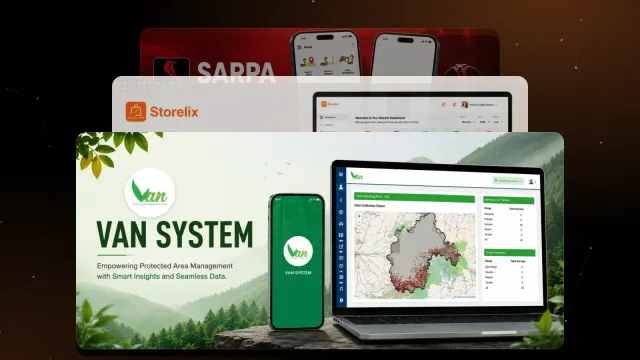
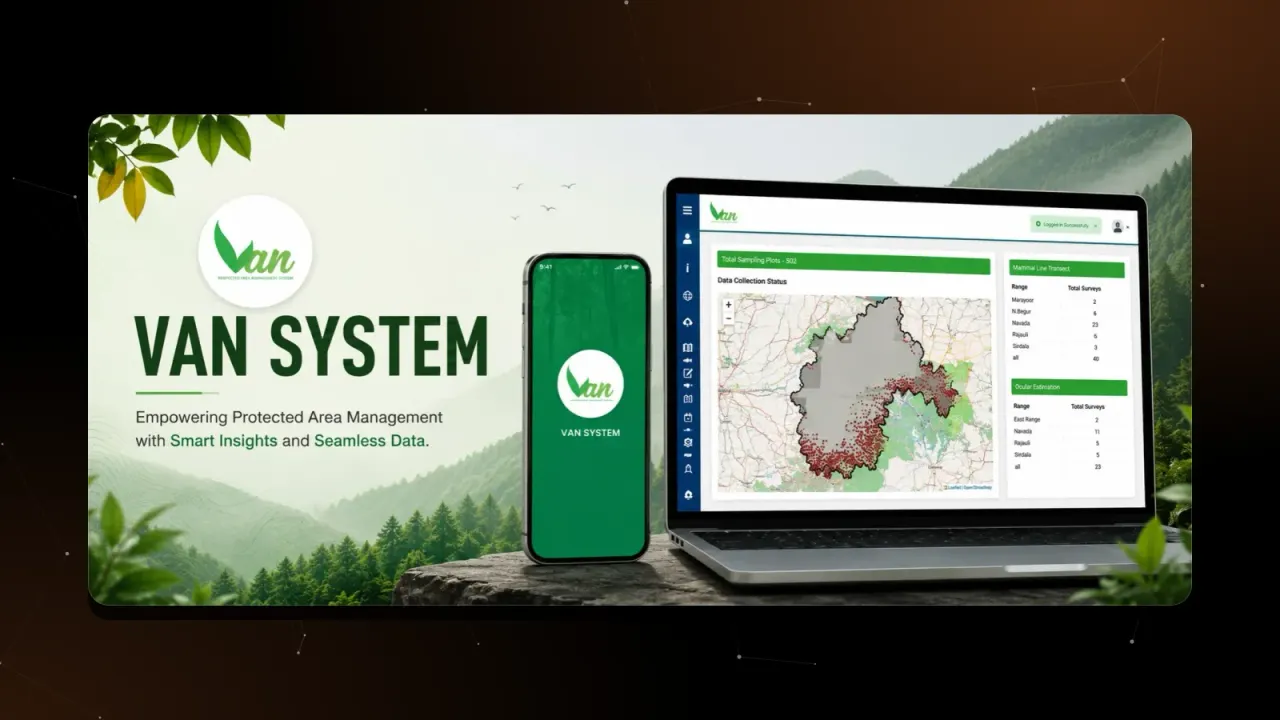
- VAN System supports scientific forest inventory, biodiversity monitoring and protected area management. A mobile app collects forest inventory, ecosystem and socio-economic data in the field. The data goes to a secure cloud repository, and a web portal automates quantitative and geospatial analysis to produce sample working plan documents.
- FIREWATCH helps officials record forest fire incidents, track their status, coordinate the response and keep central records.
- TIMBER (Timber Inventory and Movement Monitoring Registry) lets citizens and stakeholders apply for transit passes, track their applications and verify permits online.
- Property Mark Registration System allows timber merchants to register unique property marks under the Kerala Forest Produce Transit Rules, which supports legal transit verification.
- Plantation Monitoring and Management System records plantation details and field operations, and tracks progress.
- NTFP-IMS manages non-timber forest products and connects forest officials, tribal communities and collection centres.
We have also built online booking and management systems for tiger reserves, including Periyar Tiger Reserve, and tools for wildlife organisations.
Lesson 1: Digitise the workflow, not just the form
It is tempting to turn a paper form into an online form and call it done. The real gain comes from following the whole process: who submits something, who checks it, who approves it, who needs to be told, and what record is left behind. A transit pass that is applied for online but still has to be chased by phone has only been half digitised.
Lesson 2: Design for the person in the field
The people who record data in a forest are not sitting at a desk with a fast connection. Screens must be simple, data entry must be quick, and the tools need to suit the way field staff really work. This is why a system like VAN System pairs a mobile app for collecting data with a web portal for analysis, so that each person gets the right tool for their job.
Lesson 3: One trusted record beats many copies
When data lives in separate files, nobody is sure which version is right. A central repository, with clear permissions on who may add or change what, gives officials one reliable source they can report from and make decisions with.
Lesson 4: Show people where their request stands
For public-facing services, the most common frustration is not knowing what is happening to an application. Letting applicants track their status removes a great deal of uncertainty and of follow-up work for the department.
Lesson 5: Build the rules into the system
Government processes follow legal rules, such as the transit rules that govern timber movement. The software has to reflect those rules faithfully. We spend real time with the department on understanding the rules before designing anything, because a system that gets the rules wrong is worse than no system.
Lesson 6: Plan for different kinds of users from the start
A single platform may serve field staff, office officials, senior officers, citizens and community members. Each needs different screens and different permissions. Deciding these roles early saves a great deal of rework later.
Working with us on a similar project
Whether you run a government department, a conservation organisation or a business with complex field operations, the same principles apply. If you have a process you would like to bring online, get in touch and we will be glad to talk it through.
Frequently asked questions
Does Leopard Tech Labs build software for government departments?
Yes. We have built several systems for the Kerala Forest Department, including VAN System, FIREWATCH, TIMBER, the Property Mark Registration System, a plantation monitoring system and an information system for non-timber forest products. You can read about each one on our works page.
Which platforms do these systems use?
Most are secure web portals. Some, such as VAN System and the plantation system, also include an Android app for collecting data in the field.
Written by Leopard Tech Labs