In Kerala, as in much of India, snakes and people share the same land. A frightened family may hurt a snake that was only passing through, and a snakebite is a medical emergency in which every minute matters. We built two apps to help with both problems: SARPA and Serpent.
The problem
When a snake turns up in a house or compound, people need to know who to call. When someone is bitten, they need to know where the nearest hospital with treatment is, and they need that information immediately. The apps exist to put that information in everyone's hands.
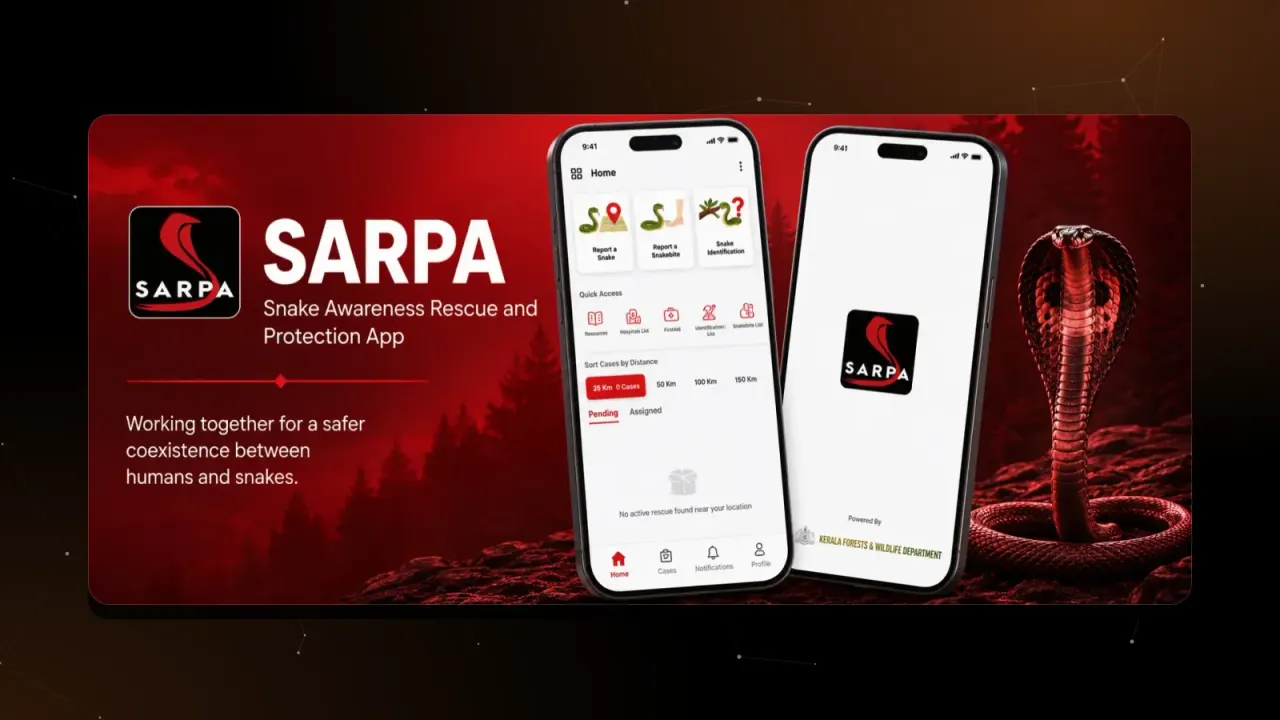
SARPA: Snake Awareness, Rescue and Protection App
SARPA was developed to streamline the rescue of snakes from human habitations, reducing the harm to both snakes and people. It helps in several ways:
- Rescue: it gives rescue teams and authorities the precise location of a conflict, so they can decide what to do with better information.
- Emergencies: it helps people find the nearest place where snakebite treatment is available.
- Information: it shows the type of snake, rescuers available in the area and nearby anti-venom treatment hospitals.
- Awareness: it helps the public understand the role snakes play in the ecosystem.
The app supports the Kerala Forest Department in dealing with human and snake conflict peacefully. Muhammed Anvar Y, Assistant Conservator of Forests, Biodiversity Cell and Nodal Officer for SARPA, described it as a pioneer initiative by the Kerala Forest Department and the first of its kind in India.
Serpent: a snake and snakebite guide
Serpent is a mobile reference guide that covers a wide variety of snakes and the steps to take in a snakebite emergency. People can use it to find the nearest hospital that can treat snakebite, connect with the nearest snake expert for help with an emergency or with identifying a snake, and report a sighting. Each report goes to the server and is shown on a map. Serpent has been put to use in India and in Brazil, and at the time of writing a next-generation version, SERPENT 2.0, is being developed in partnership with HCL.
What we learned building them
In an emergency, every extra tap costs time
The person using the app may be frightened, or may be caring for someone who has been bitten. The most important actions, such as finding a hospital or reaching an expert, have to be obvious and quick. Everything else can wait.
Location is the foundation
Almost every feature depends on knowing where something is: where the snake is, where the nearest rescuer is, where the closest hospital is. Getting location right, and showing it clearly on a map, is what turns information into help.
Local knowledge matters more than clever technology
The most valuable data in these apps comes from people: trained rescuers, hospitals that treat snakebite, and the forest department. The technology's job is to connect people to that knowledge quickly, reliably and in a form they can use.
Awareness is part of conservation
A frightened person is more likely to harm a snake. Clear, friendly information about snakes, and about what to do and what not to do, protects wildlife as well as people.
More conservation technology
These apps are part of a wider body of conservation work. You can read about how we have supported forest management in our article on software for forest management, or see all of our works.
If your organisation has a conservation, public safety or community problem that technology could help with, we would be glad to hear about it.
Frequently asked questions
What is SARPA?
SARPA stands for Snake Awareness, Rescue and Protection App. It was built to make the rescue of snakes from human habitations easier and safer, to give the public information about snakes, and to help people find the nearest place where snakebite treatment is available.
What does the Serpent app do?
Serpent is a reference guide for snakes and snakebite emergencies. People can use it to find the nearest hospital that treats snakebite, to reach a snake expert for help and identification, and to report a snake sighting that is then shown on a map.
Written by Leopard Tech Labs